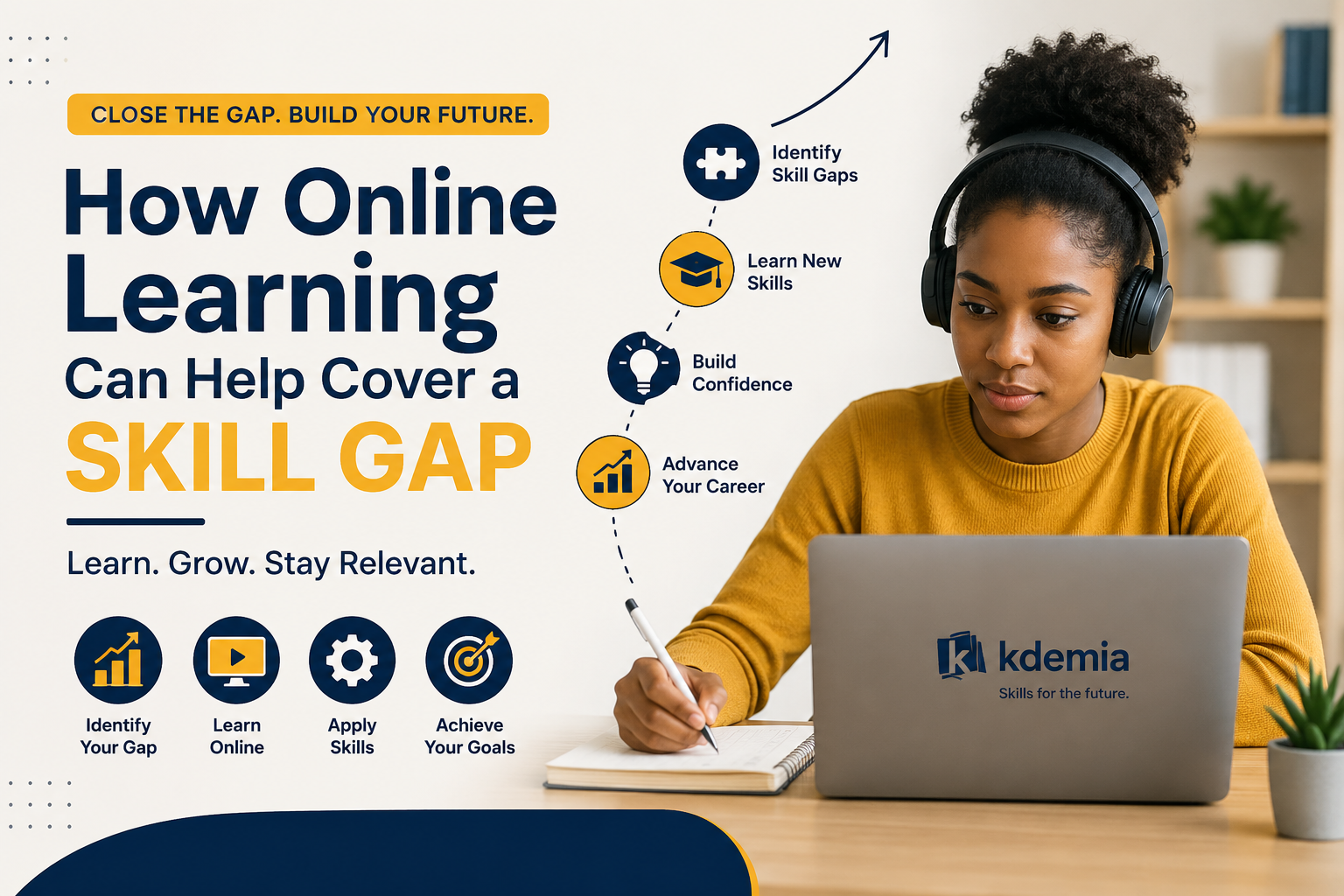
How Online Learning Can Help Cover a Skill Gap
The world of work is changing quickly. New technologies, digital tools, and modern ways of working are creating opportunities, but they are also creating skill gaps for many people. You may have a qualification, some work experience, or even years of professional knowledge and still discover that you are missing skills employers currently need.
This is where online learning can make a real difference. With access to the right courses and learning resources, you can develop practical skills, improve your knowledge, and become better prepared for today’s job market.
Focus keyphrase: Online learning for skill development
What Is a Skill Gap?
A skill gap is the difference between the skills you currently have and the skills required to perform a particular job, grow in your career, or take advantage of a new opportunity.
For example, someone may have a degree in business administration but lack digital marketing, data analysis, or project management skills. Another person may know how to use basic computer applications but want to develop skills in web design, content creation, or software development.
Skill gaps are common because industries continue to evolve. What employers needed five or ten years ago may not be enough today.
This is one reason online learning for skill development has become increasingly valuable. It gives learners an accessible way to identify areas where they need improvement and gain knowledge that can support their career goals.
Why Are Skill Gaps Becoming More Common?
Technology is one of the biggest reasons skill requirements are changing.
Businesses now rely heavily on digital platforms, artificial intelligence, data, automation, cloud services, social media, and other technologies. As these tools become part of everyday work, employees and job seekers need to keep learning.
Another factor is the changing nature of careers. People are no longer limited to one career path throughout their working lives. Someone who studied one subject at university may later move into technology, digital marketing, entrepreneurship, design, or another field.
This means continuous learning is becoming increasingly important.
With online learning for skill development, learners can respond to these changes without necessarily having to leave their jobs or return to traditional classrooms.
Online Learning Makes Skill Development More Accessible
One of the biggest advantages of online education is accessibility.
Traditional education can require significant amounts of time and money. Learners may need to travel to a physical location, follow a fixed timetable, or take time away from work and other responsibilities.
Online courses provide a more flexible alternative.
You can learn from your computer, tablet, or smartphone and study according to your schedule. This makes it easier for students, employees, entrepreneurs, job seekers, and other busy individuals to continue developing their skills.
For people in Nigeria and other developing economies, this flexibility can be particularly useful. A learner does not necessarily have to relocate to another city or country to access quality educational content.
Learn Skills That Employers Actually Need
Another important benefit of online education is the ability to focus on practical skills.
Instead of spending years studying a broad subject, learners can choose specific courses that address a particular skill gap. For example, someone interested in digital careers could learn:
- Content creation
- Digital marketing
- Graphic design
- Web development
- UI and UX design
- Data analysis
- Project management
- Social media marketing
- Video editing
The right course can help you move from simply knowing about a subject to actually developing practical abilities.
This is where online learning for skill development can complement formal education. A university degree can provide a strong academic foundation, while online courses can help you develop specific skills that are relevant to current opportunities.
Learn at Your Own Pace
Everyone learns differently.
Some people understand concepts quickly, while others need more time to practise and review what they have learned. Online learning gives learners greater control over their pace.
You can pause a lesson, repeat a difficult section, take notes, practise a skill, and return to the course later.
This flexibility can make learning less stressful and more effective.
It also allows people who are working or studying full time to continue developing themselves without completely changing their existing schedules.
Build Confidence Through Practical Learning
Having a skill gap can sometimes affect your confidence.
You may see a job advertisement and realise that you do not meet all the requirements. Instead of seeing that as the end of the opportunity, you can use it as a guide for what you need to learn.
For example, if several jobs you are interested in require Excel, digital marketing, Figma, or JavaScript, those requirements can help you identify areas for improvement.
You can then choose relevant courses and begin building your knowledge.
Over time, online learning for skill development can help you become more confident because you are actively working towards becoming better qualified for the opportunities you want.
Online Learning Can Support Career Growth
Learning does not have to stop after getting a job.
Professionals can use online courses to develop new abilities that may help them take on greater responsibilities, change roles, or pursue promotions.
For example, a marketing professional could learn data analytics. A graphic designer could learn UI design. A developer could learn a new programming framework. A business owner could learn digital advertising.
These additional skills can make it easier to adapt when your industry changes.
The key is to focus on learning that connects with your career goals rather than collecting certificates without developing practical knowledge.
How to Use Online Learning to Close Your Skill Gap
If you want to use online learning for skill development effectively, start by identifying the skills you are missing.
Look at job descriptions, speak with professionals in your desired field, and examine the requirements for the roles you want.
Next, choose courses that directly address those gaps.
Do not try to learn everything at once. Pick one or two important skills and focus on developing them properly.
Most importantly, practise what you learn. Build projects, complete exercises, create a portfolio, or apply the knowledge to real situations.
Learning becomes much more valuable when you can demonstrate what you can actually do.
Start Closing Your Skill Gap Today
A skill gap does not have to permanently limit your career opportunities. Skills can be learned, improved, and developed with consistent effort.
The important thing is to recognise what you need to learn and take deliberate steps towards acquiring those skills.
Online learning for skill development provides a flexible and accessible way to keep growing in a rapidly changing world. Whether you are a student preparing for your first job, a professional looking to advance, or someone considering a career change, the right online course can help you move closer to your goals.
The future of work will continue to change. The people who keep learning and adapting will be better prepared to take advantage of new opportunities.
Start with one skill. Learn it. Practise it. Apply it. Then move on to the next.
Your next career opportunity may begin with something you decide to learn today.